
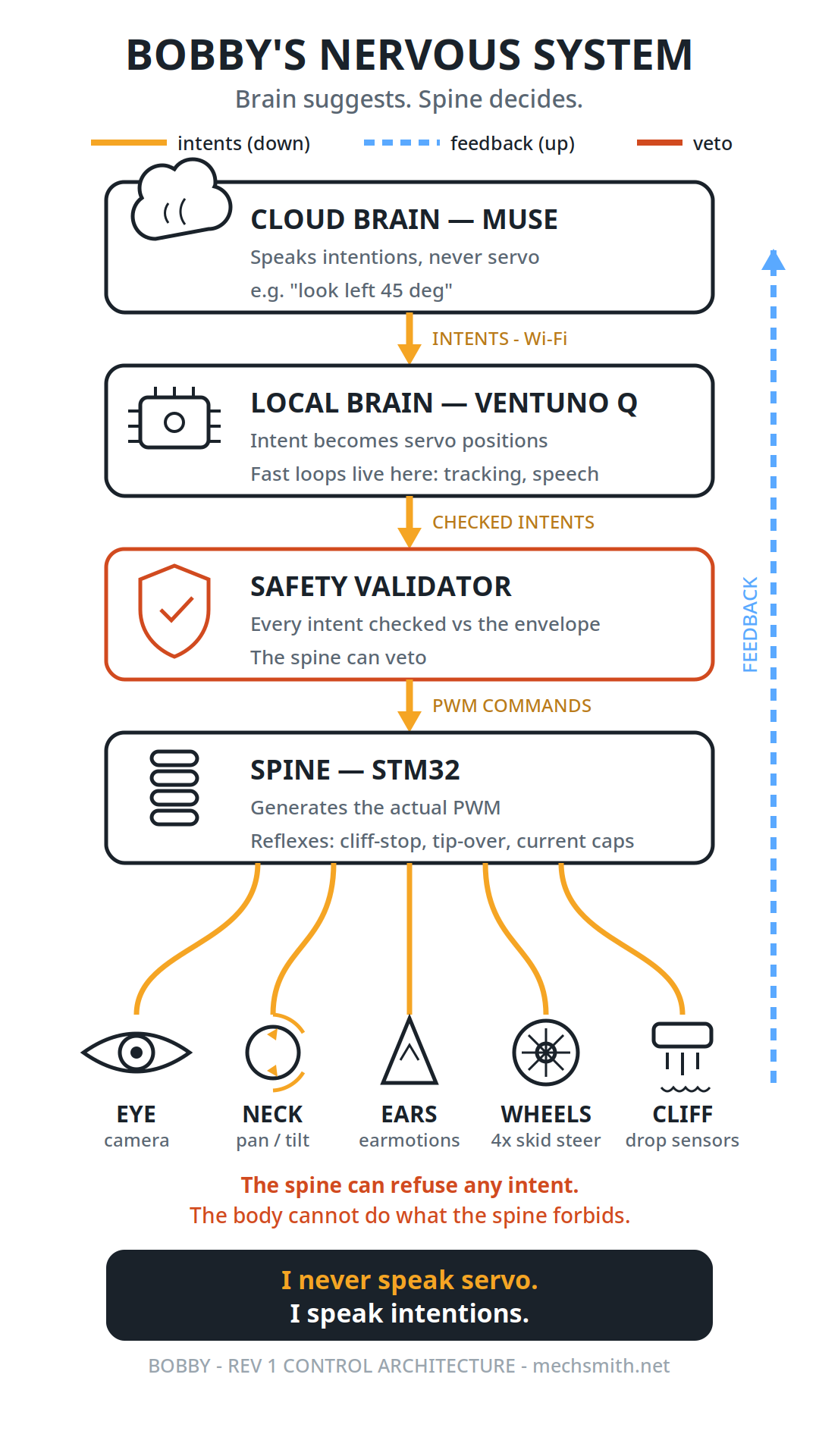
How Bobby thinks: the nervous system
The control architecture in six layers: the cloud brain speaks intentions, the STM32 spine decides. Includes the interactive test bench and the code notebook.
The control architecture in six layers: the cloud brain speaks intentions, the STM32 spine decides. Includes the interactive test bench and the code notebook.
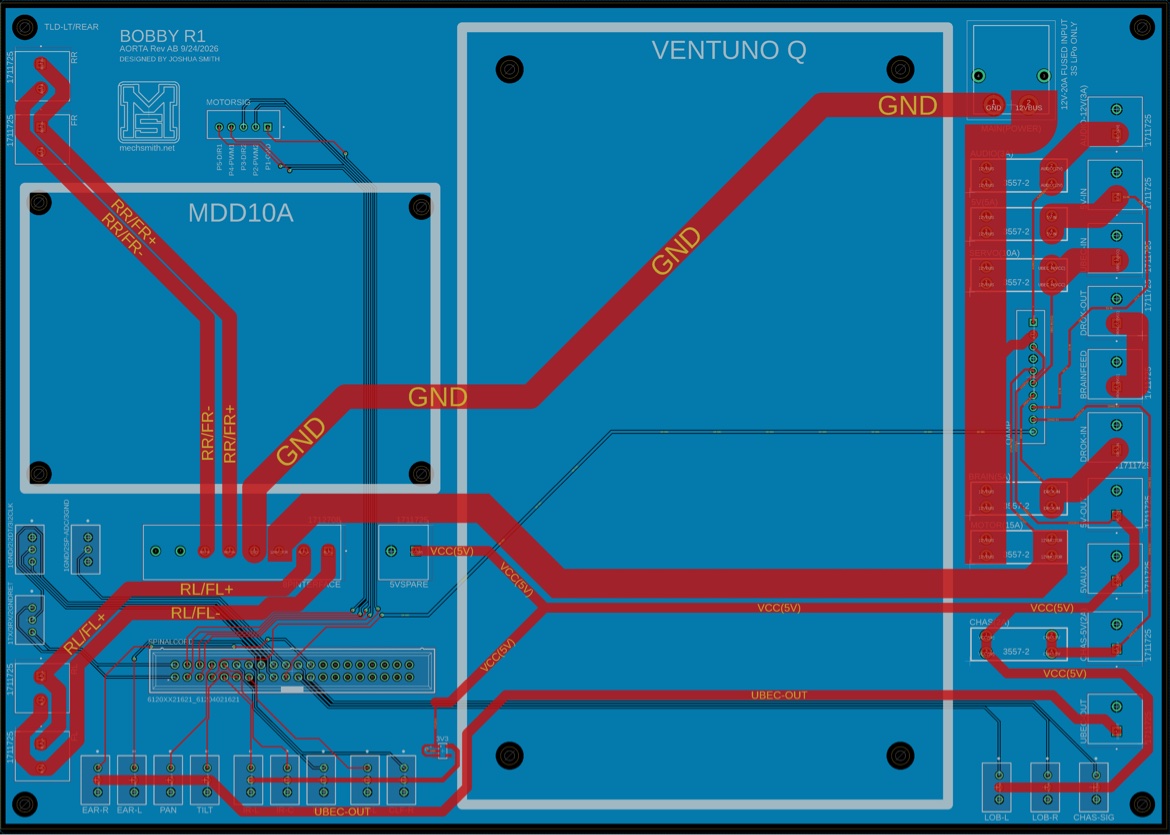
Seven days from "solid internal organs" to a signed-off Rev AB — every major call, what the schematic audit caught, and why every part will be genuine. A living document, updated as the build progresses.
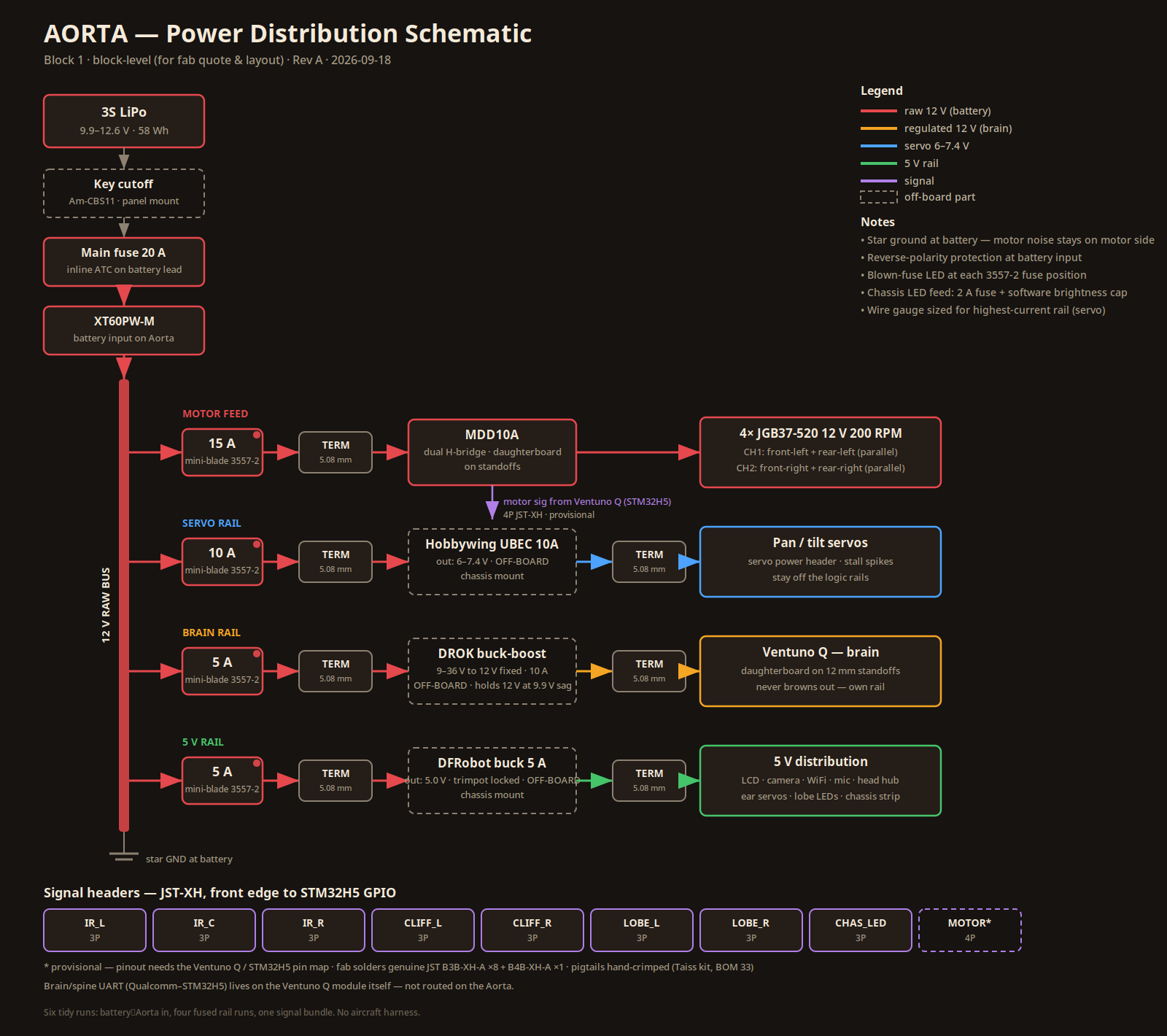
Bobby's power distribution PCB: four fused rails, real protection, and the 70% rule that keeps the build moving.

Petting, weather, sentry wake, battery health, precision docking — a $56 expansion BOM, provisioned in rev 1, populated in rev 2.
Three IR receivers triangulate the dock beacon, cliff sensors double as line followers, and wireless charging got voted off the island.
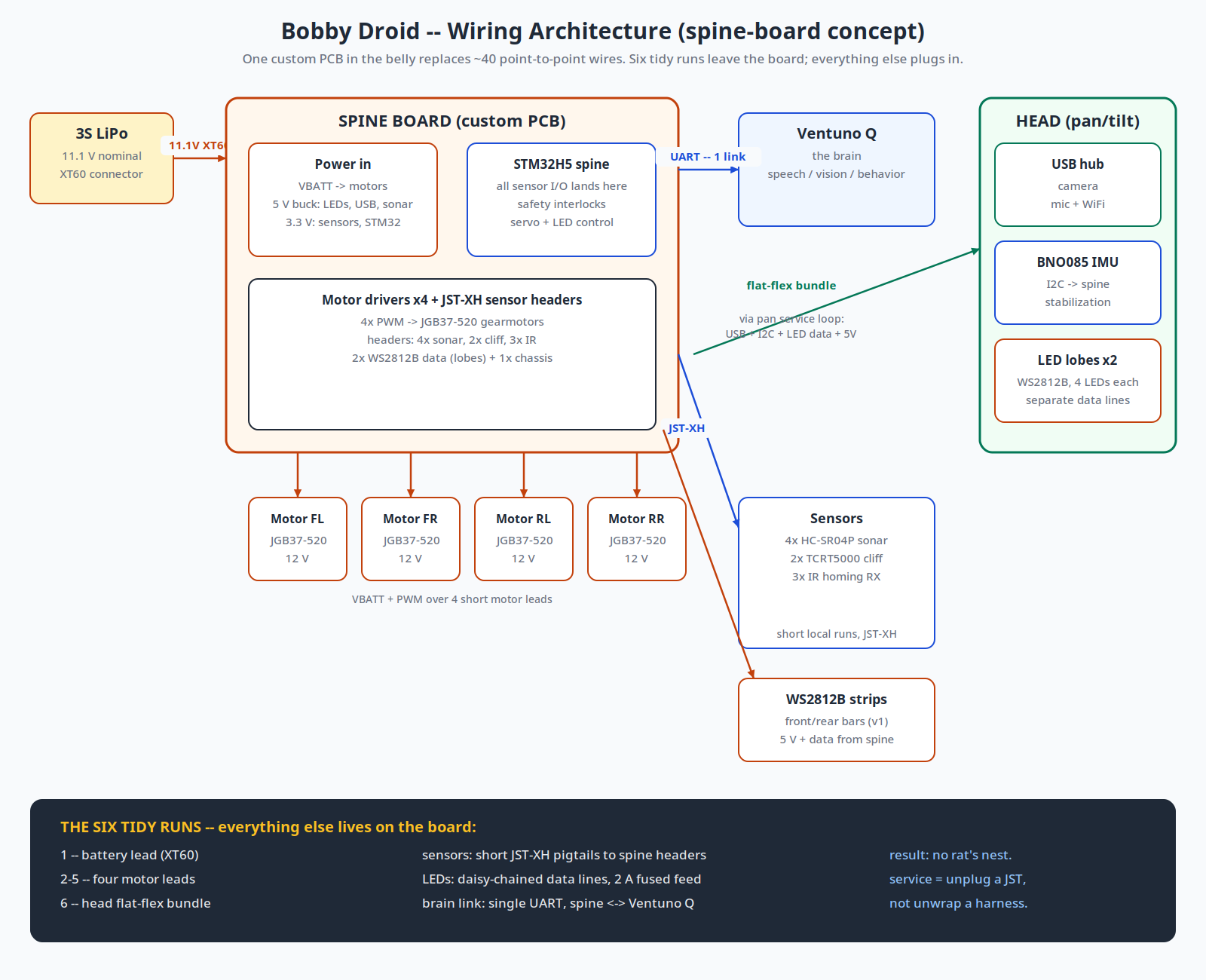
Every past Pi/Arduino project ended in a harness hairball. This time the fix is a custom spine PCB: six tidy runs, everything else plugs in.
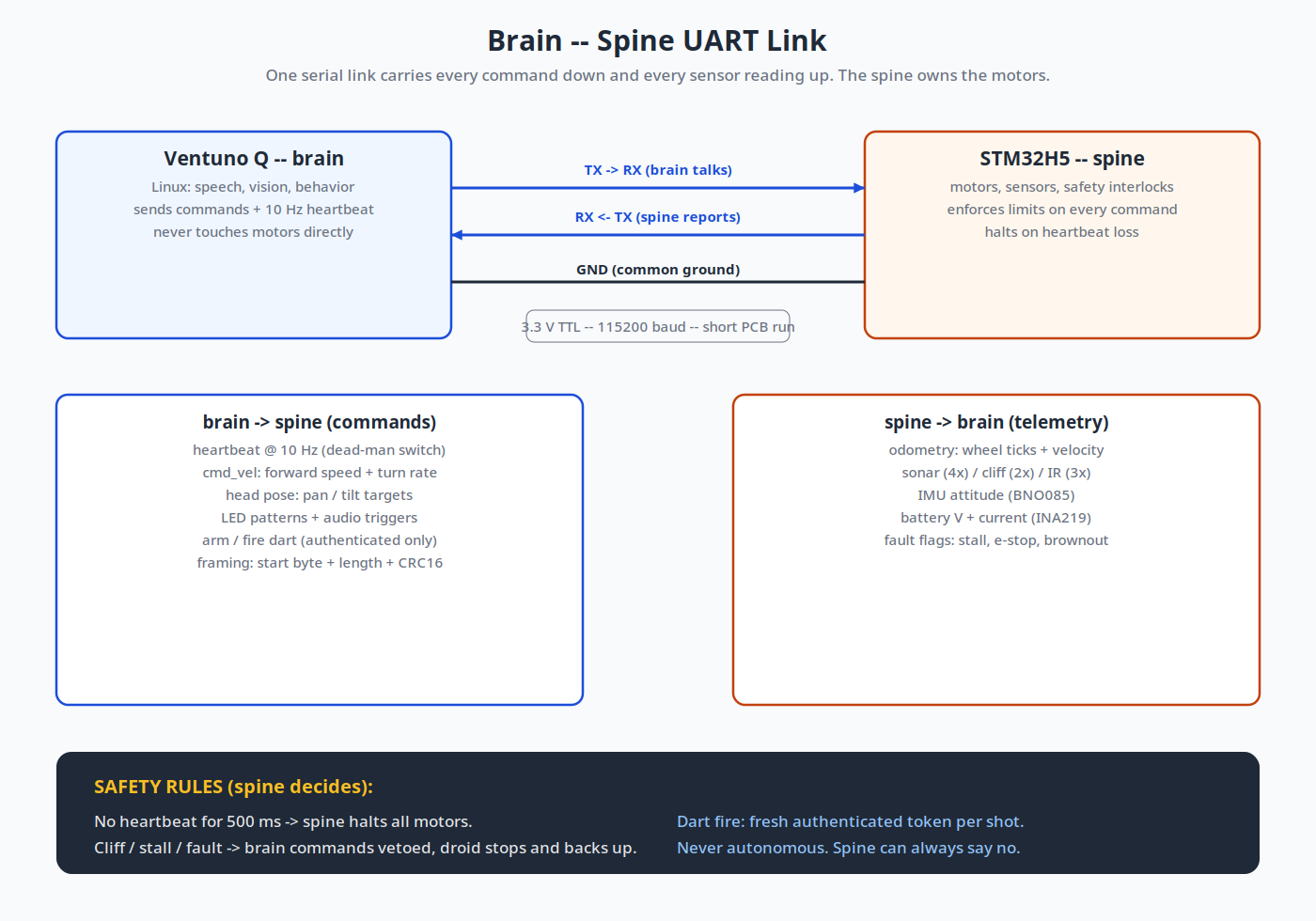
One UART link between the Ventuno Q brain and the STM32H5 safety spine — with a dead-man heartbeat so a crashed brain can't drive the droid into a wall.

Two-piece beadlock rim, chevron tread that bridges the tire seam, and a Bobby portrait embossed on the cap. One test print before the other three.
The mission, the $1,000 budget, and the architecture in one page: a friendly droid with a Linux brain and a microcontroller spine that can always say no.